Growing Into the Pack
How wolf pups become wolves—learning, belonging, and the social “infrastructure” of a family group (with regional differences where they matter)
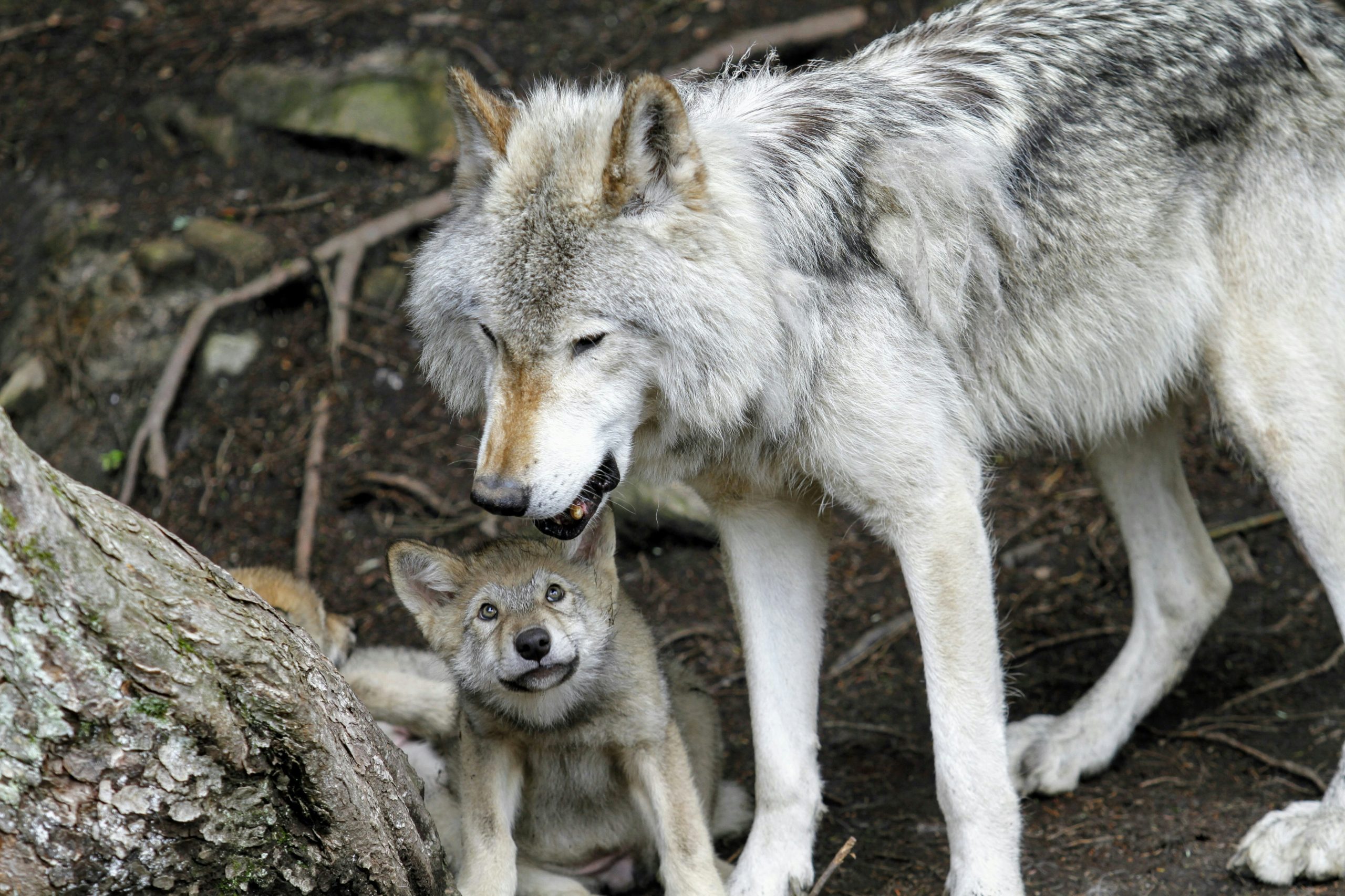
Wolf pups aren’t born into a “pack” in the way people imagine a military unit or a rigid hierarchy. They’re born into a family system—and their first job isn’t dominance. It’s development: staying warm, staying fed, and slowly learning how to be a wolf by living inside a moving, cooperative society.
This post follows naturally after Spring’s Hidden Season (pregnancy and birth). Now we move into what happens next: how pups fit into the pack—how they’re fed, protected, socialized, and eventually trained by experience.
1) The pack is a family, not a club
In most wolf populations, a pack is built around a breeding pair and their offspring from one or more years. That structure matters because pup integration isn’t a negotiation—it’s a natural outcome of kinship, caregiving, and shared survival.
The pack is also a living system of roles:
- the breeding female anchors the early den period
- the breeding male often increases provisioning and territory defense
- older siblings (yearlings and sometimes two-year-olds) frequently act as “helpers,” babysitters, escorts, and play partners
- every adult contributes indirectly by maintaining territory boundaries and reducing risk
So when we ask “How do pups fit into the pack?” the honest answer is: the pack is built to make pups fit.
2) The first weeks: “den life” and a world measured in warmth
Newborn pups are fragile. They can’t travel far, can’t thermoregulate well, and depend on milk. For a while, their world is a den and a small radius around it.
What “fitting in” looks like at this stage:
- nursing and sleeping dominate
- adults rotate through the den area—some guarding, some hunting
- pups begin recognizing pack scent and voices
- early social bonds form through simple contact: warmth, grooming, proximity
This is also the period when disturbance matters most. In human-used landscapes, repeated disruption can lead to den moves—costly for pups and energetically expensive for adults.
3) The food system: how pups learn “pack economy”
As pups grow, their diet shifts gradually from milk to solid food. One of the most important pack behaviors shows up here:
Regurgitation and provisioning
Adults bring food back to pups—sometimes by carrying meat, often by regurgitating partially digested food. It’s not glamorous, but it’s the backbone of pup survival.
This matters because it teaches pups something early:
- the pack is a shared system, not a set of independent hunters
- feeding pups is a collective investment
- learning happens around food: social cues, patience, conflict limits, and bonding
You can often see the beginnings of pack social rules here—pups push boundaries, adults correct gently, siblings squabble, and the “house rules” of wolf society get learned through repetition.
4) The social classroom: play is training
People sometimes underestimate play because it looks silly. In wolves, play is a serious developmental tool.
Through play—chasing, wrestling, tugging, ambushing—pups practice:
- coordination and balance
- bite inhibition (how hard is “too hard”)
- reading body language
- responding to social signals
- early hunting sequences (stalk → chase → grab)
This is where pups “fit into the pack” socially: they learn how to move with others, how to escalate and de-escalate, and how to belong without constant conflict.
5) The shift from dens to rendezvous sites: the pack expands pup-world
As pups become mobile, many packs shift from the den to rendezvous sites—safer, semi-open areas where pups can stay while adults hunt. Think of it as a seasonal daycare + training ground.
Rendezvous sites matter because they:
- reduce parasite and sanitation pressure at the den
- give pups more space to develop stamina
- allow adults to hunt more efficiently while still returning frequently
- broaden the pups’ sensory map of the territory
This is also where pups start meeting the pack as a moving network, not a single “home base.”
6) Who teaches pups? Often: siblings
In many regions, yearlings are crucial. They babysit, play, escort pups, and sometimes intervene when pups go too far.
This “alloparenting” (care by non-parents) is one reason wolves can be so resilient as social units. It spreads the workload and increases pup survival—especially in years when prey is hard to catch or the territory is pressured.
It also shapes personality and behavior:
- pups raised with strong sibling helpers may get more play and social learning
- pups in smaller packs may have fewer “teachers,” which can change how quickly they develop certain skills
7) Regional differences: how pups “fit” depends on landscape realities
The basic social process—family structure, provisioning, play, rendezvous sites—shows up across wolf populations. But regional pressures can change the details.
A) Arctic and far-north systems: short summers, fast learning
In the far north, summer is short and winter returns early. That can compress the window for pup growth. Pups may need to develop stamina quickly, and packs must capitalize on seasonal food availability.
Den structures can also differ—rocky shelter or natural cavities where digging is limited—changing how protected early pup life is.
B) Temperate forests and mixed landscapes: mobility and human overlap
In forested regions with roads, villages, or recreation, pup integration includes learning:
- where humans are predictable
- where risk is high (roads, dense settlement edges)
- how to move through a landscape that isn’t purely wild
This doesn’t mean pups “become habituated”—most wolves avoid people—but it does mean the territory’s human footprint becomes part of what young wolves learn to navigate.
C) Iberia and other humanized landscapes: secrecy is a skill
In places like Iberia—where wolves can persist close to people—pup survival can depend on:
- den/rendezvous secrecy
- careful use of cover
- avoidance of high-disturbance corridors
In these landscapes, “fitting into the pack” also means fitting into a reality where being unseen is an advantage.
D) Hot, open, or dry systems: heat and exposure shape pup life
Where heat and open terrain are major constraints, pups may face different challenges:
- overheating and water stress
- fewer shaded rendezvous options
- different prey rhythms
- earlier seasonal timing (to avoid peak heat)
The social process stays the same, but the environmental rules change the daily schedule of survival.
8) When pups become contributors: the long runway to hunting
Wolf pups don’t become effective hunters overnight. Early on, they may follow adults, observe, and join movement. Over time they begin participating more actively.
A good way to think of it:
- Year 0: survive, learn, move, play, eat what’s provided
- Year 1: practice and participate more; still learning boundaries and coordination
- Year 2+: many wolves become full contributors; some disperse to form new packs
This matters because it explains why stable pack structure can reduce conflict: experienced packs often hunt wild prey efficiently and maintain territory routines. Disrupted packs can behave differently—not because wolves “turn bad,” but because social structure and learning pathways change.
9) The adolescence fork: stay or disperse
Eventually, pups become juveniles and face a major transition: dispersal.
Some wolves remain with their natal pack longer; others disperse to find mates and territory. Dispersal patterns vary by region depending on:
- habitat connectivity
- human pressure and road density
- prey distribution
- population density and territory availability
This is the part of the wolf story that often intersects most strongly with policy and public perception—because dispersing wolves are the ones most likely to show up in unexpected places.
One-minute actions
- If you see spring/summer wolf content: remember you may be seeing a family season—give space.
- When you hear “wolves are out of control,” ask: is this a pup-year dispersal narrative or an evidence-based pattern?
- Support education and prevention—because coexistence isn’t won in arguments. It’s built through systems that help both people and wildlife thrive.
Filed under
Stay in the pack