
The Long History of Anti-Wolf Sentiment
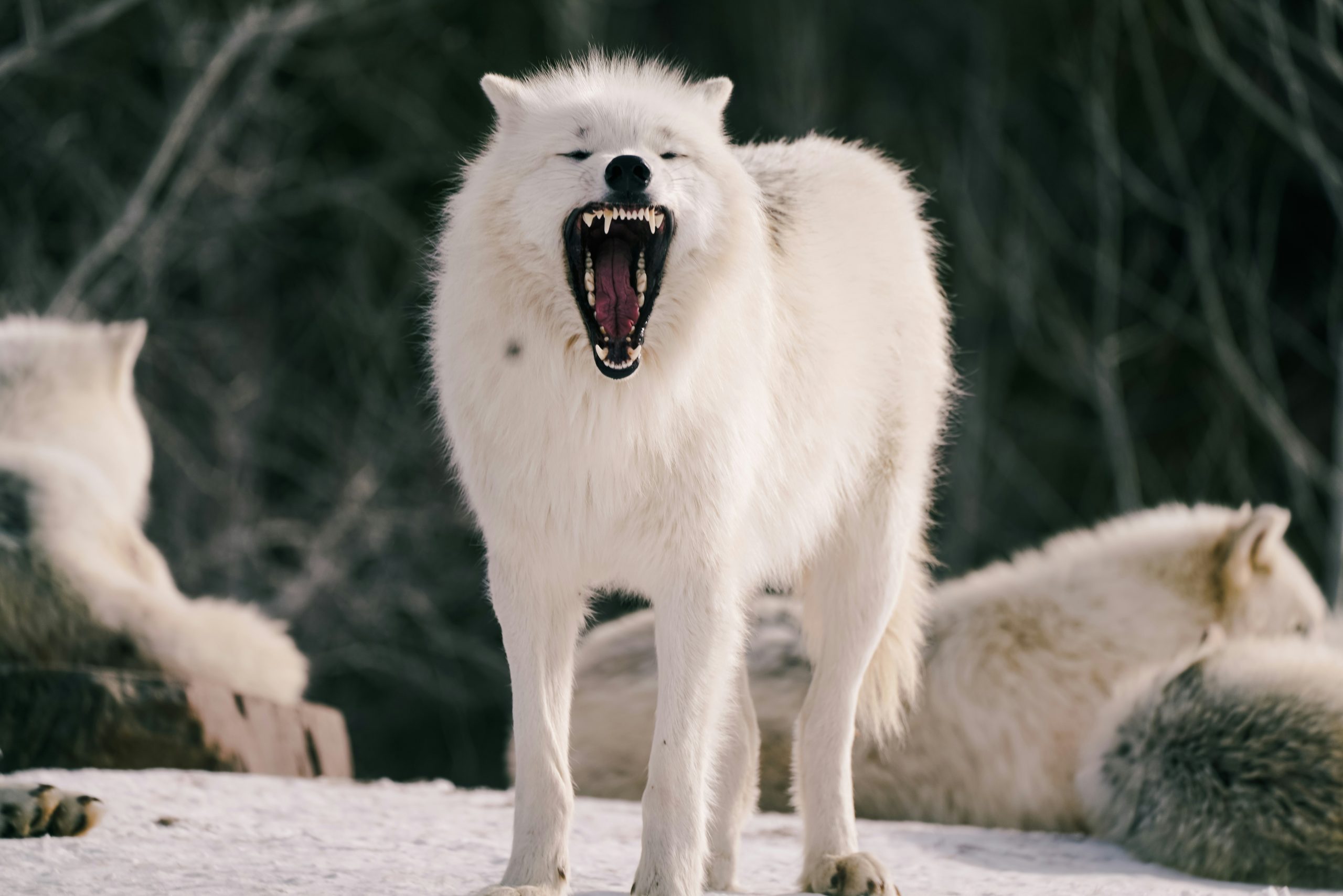
Photo by Yomex Owo on Unsplash
Why fear of wolves has deep roots, and why one true story can still be misused
Wolf hate didn’t appear out of nowhere, and it didn’t come from a single cause. It’s the product of a long, layered history where real danger, economic loss, religious symbolism, state power, and storytelling all braided together.
To understand that complexity, it helps to start with an event that still echoes in Finnish memory and debate: the Wolves of Turku.
A case that shaped fear: the Wolves of Turku
In 1880 and 1881, a trio of wolves in the Turku region of Finland reportedly killed 22 children, with an average victim age of 5.9 years. The situation became so alarming that local and national government became involved, and help was called in from Russian and Lithuanian hunters, as well as the army. The last reported victim was killed on 18 November 1881. The attacks ended after an old female wolf was shot on 12 January 1882, and an adult male was poisoned twelve days later.
The afterlife of this incident is also striking: one wolf was sent to the hunting museum of Riihimäki, another to St Olof’s school where they can still be seen, while the third reportedly ended up as a doormat and “disappeared.”
Even today, the story remains contested in places. Some conservationists have debated the reliability of the historical record. One perspective notes there’s no direct evidence these wolves were formerly captive animals (though the possibility couldn’t be ruled out) and points out the female had poor teeth. Another claim, attributed to Erkki Pulliainen in 2005, suggested one Turku wolf may have been a wolf-dog hybrid. Eirik Granqvist later wrote that examination of the remains in the museum and school confirmed they were wolves.
Whatever disputes remain around the record, the Turku story illustrates something essential about wolf hate:
When wolves become associated with child deaths, the cultural impact becomes enormous and long-lived.
Why wolf hate is never just “about wolves”
Wolf hate tends to grow when several forces align:
1) Real trauma creates lasting cultural memory
Events like Turku become more than incidents. They become templates that people use to interpret all wolf presence afterward. A community that has experienced (or inherited the memory of) attacks can carry fear across generations. Even if incidents are rare, a single episode can become the “proof story” people return to.
This is part of why wolf debates are rarely “just biology.” They’re arguments about what kind of world people believe they live in.
2) Livelihood conflict makes fear practical
Historically, wolves were often framed as enemies not because of myth, but because they could threaten livestock, working dogs, and economic stability.
In many rural contexts, wolf hostility grew from a basic equation:
- loss is immediate and personal
- benefits of wolves (ecological roles) feel distant or abstract
- responsibility for prevention is unevenly shared
So even where human attacks were rare, wolves could still be treated as “problem animals” because they threatened the margin of survival.
3) Wolves became symbols in moral storytelling
In parts of European folklore and Christian moral imagery, wolves were used as metaphors: predator vs flock, danger vs innocence. Those metaphors didn’t just stay in stories. They shaped how wolf presence felt—as moral threat, not only ecological reality.
This matters because symbolism spreads faster than nuance. The “wolf” becomes a character. And the character is often used to make a lesson—about fear, wilderness, or evil.
4) States institutionalized wolf hatred
Wolf hate wasn’t only cultural; it was also administrative. In many places, wolves were targeted through:
- bounties
- organized hunts
- military participation
- extermination campaigns framed as modernization
Turku reflects this institutional dimension: when the fear peaked, the response escalated into coordination across authorities and regions. That’s a pattern repeated across many countries: wolves become a “public problem” managed through force.
5) Uncertainty and rumor amplify everything
Turku also shows how stories evolve. Even if the core fact pattern is stable (attacks happened; wolves were killed), the details can become disputed over time: Were they wolves or hybrids? Were they captive? Were the records accurate?
This is not unusual. When trauma collides with incomplete records, the story becomes contested, and people may use that uncertainty to argue whatever they already believe.
Which leads to a key lesson:
Wolf hate thrives in the gap between scary stories and careful evidence.
What Turku teaches us about wolf hate today
Lesson 1: “Rare” doesn’t mean “imaginary”
A mistake some pro-wolf messaging makes is treating all fear as irrational. Turku reminds us that historically, harm did occur. Denying that erodes trust immediately.
A better approach is:
- acknowledge the reality of historical incidents
- explain how context shapes risk
- focus on prevention, education, and keeping wolves wild
Lesson 2: “One event” can dominate policy for decades
Human risk perceptions don’t operate on averages. They operate on vivid examples. A single event can shape the political “common sense” of an entire region—especially when children are involved.
This is why wolf education must be honest and emotionally literate:
- don’t mock fear
- don’t inflate it
- don’t erase it
- put it in context with clear guidance and evidence
Lesson 3: The wolf is always two things: animal and symbol
Wolves are real animals with predictable ecological needs. But “The Wolf” is also a cultural figure shaped by centuries of storytelling.
Wolf hate often grows when the symbolic wolf overwhelms the biological wolf—when we stop talking about:
- habitat
- prey
- behavior
- prevention
- human practices that increase risk (feeding, attractants, habituation)
…and start talking about wolves as moral villains.
A better way to talk about wolf hate
If we want coexistence, we need a framework that can hold complexity:
- Respect history Incidents like Turku matter. They deserve seriousness, not dismissal.
- Protect livelihoods Prevention works best when communities are supported, not blamed.
- Separate story from behavior A wolf in a landscape is not automatically the wolf from the worst story we remember.
- Keep wolves wild Most modern risk management focuses on preventing habituation and food conditioning and on reducing attractants—because patterns are shaped by opportunity.
- Build trust through accuracy When records are disputed, say so. When evidence exists, point to it. Avoid turning uncertainty into propaganda.
What you can do today
- If you hear a wolf claim rooted in history (“wolves always…”), ask: Which story? Which context? What’s the evidence?
- If someone cites Turku (or any famous incident), don’t deny it—respond with: “That happened, and it mattered. Here’s what we know, what’s debated, and how modern prevention reduces risk.”
- Support education that treats wolves as real animals and people as real communities, not caricatures.
The takeaway
Wolf hate has a history because wolves have lived close to humans for a long time, and because the stakes have sometimes been real: fear, loss, trauma, and power.
The Wolves of Turku show how a single, terrifying episode can leave a long shadow—and how, over time, the story can become both a warning and a weapon.
If we want a future shaped by coexistence rather than fear, we have to do something difficult but necessary:
Hold the facts, hold the grief, and still choose reality over myth.
Filed under
Stay in the pack