Two Indigenous Communities Helped Preserve Black Caimans
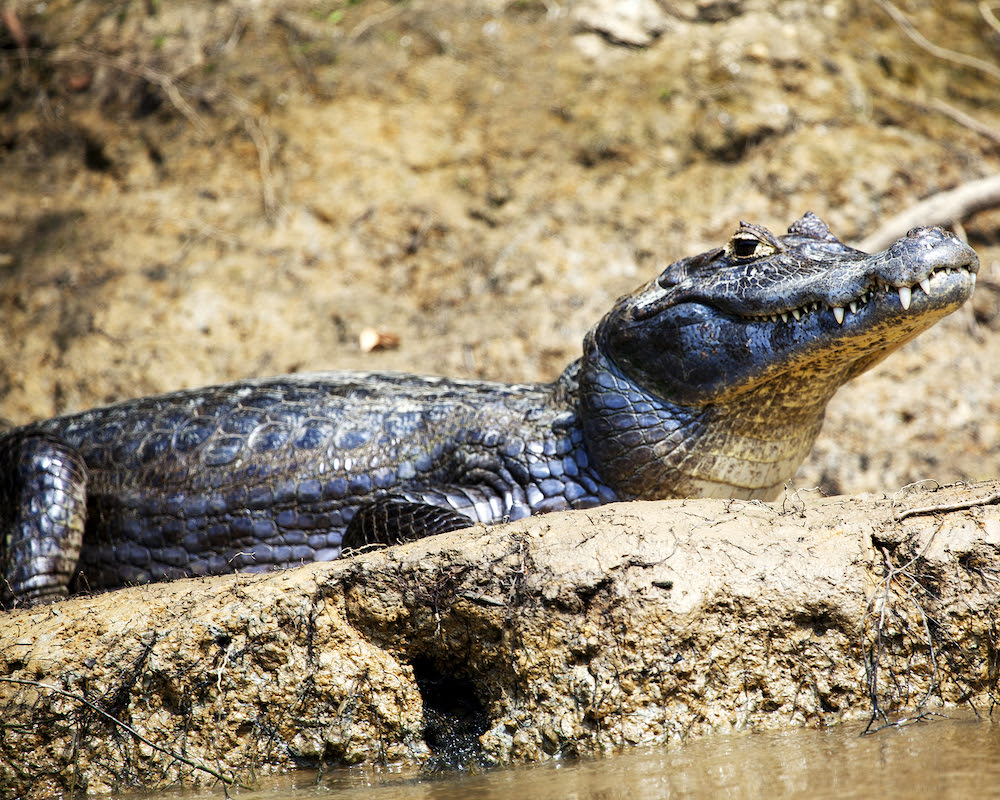
Black Caimans are part of the alligator family. They’re the biggest species in that family.1 They are found in the Amazon River basin, in countries including Bolivia, Brazil, Colombia, Ecuador, and Peru.1&2 They have dark skin that helps them camouflage during the night when they’re hunting for food.2
However, their skin is what has put them at risk. Hunting for their skin was common in the 50s and continued throughout the 70s.1 This species is sacred to the indigenous communities of the Caquetá River, and so in 2008, the Borikada and Curare communities decided to put together an action plan to save this species.2
They built a lookout cabin and had patrols go out to study and look after these caimans. Their hard work paid off. When they took inventory after 14 years of these efforts, they found 123 Black Caimans.2
Black Caimans are really important to their habitats. As apex predators, they keep population numbers steady and in turn, their excrement becomes a food source for plankton.2 Once fully grown, Black Caimans don’t have predators, although jaguars and anacondas pose a risk when they’re young. They’ll eat:
- Fish
- Frogs
- Crustaceans
- Birds
- Turtles
They can even take down large mammals!1
The efforts of these communities paid off, and it shows how powerful it is to band together to make a change. It’s not just about one species, but also the other wildlife that relies on that species, too.
Sources:
Filed under
Stay in the pack