
The “Alpha” Myth Why wolf family structure is misunderstood—and why the story refuses to die
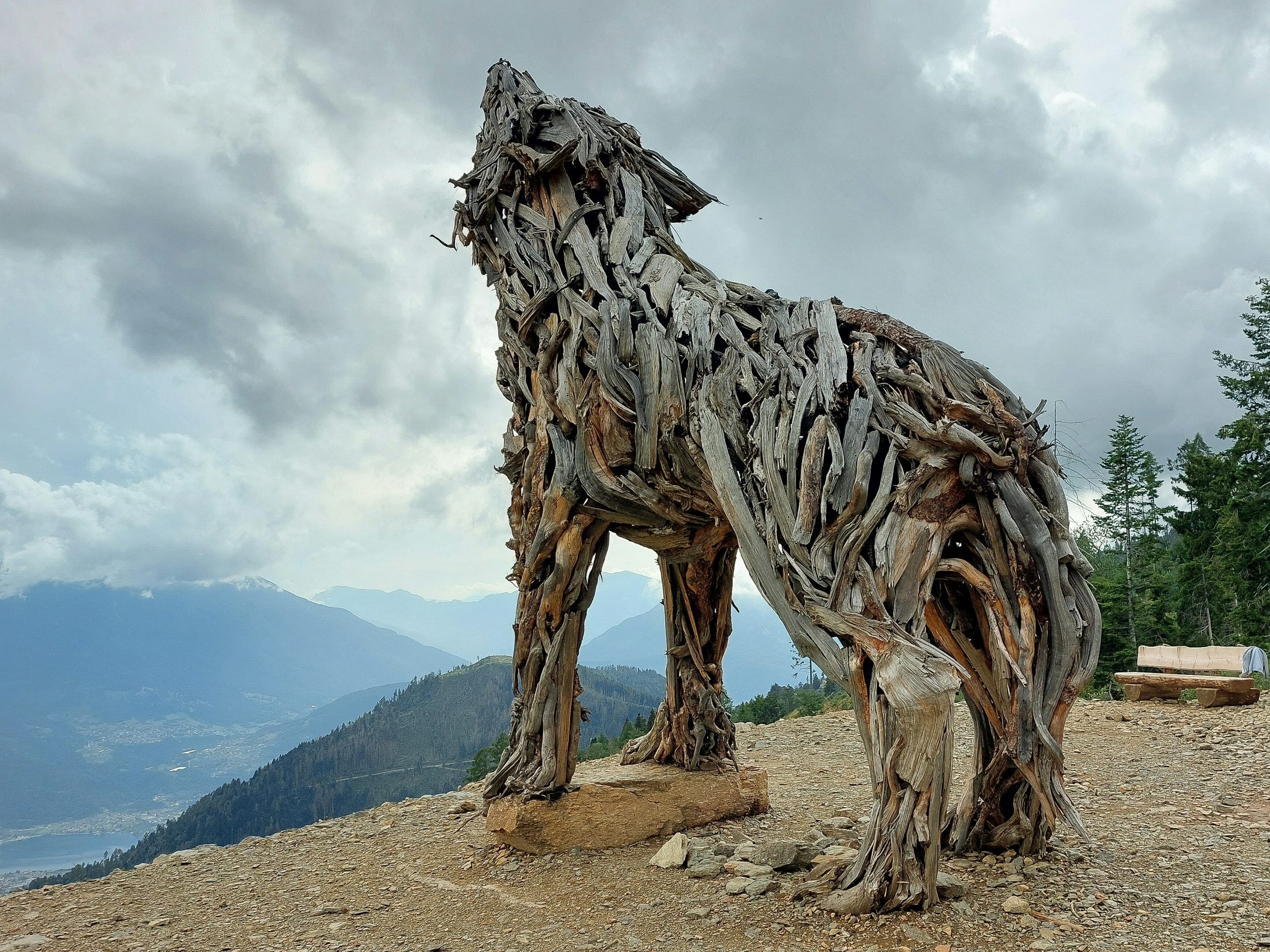
Photo by MAURO FOSSATI on Unsplash
There’s one wolf idea that refuses to leave the internet: the “alpha wolf.”
It shows up everywhere—business books, motivational quotes, dating advice, “dominance” dog training, even leadership seminars. Wolves get turned into a metaphor for power, and the metaphor gets mistaken for biology.
But here’s the reality:
Most wolf packs are families. And most of what people call “alpha behavior” is simply parent behavior.
This post is about replacing the alpha myth with what wolves actually are: social canids living in family groups, raising young, defending territory, and surviving by cooperation. We’ll also look at why the myth persists culturally—because understanding the story helps us stop repeating it.
1) Where the “alpha wolf” idea came from (and why it spread)
The “alpha” concept didn’t come from watching wild wolf families living in stable territories.
It came largely from early observations of wolves in captivity—often unrelated individuals forced into artificial groupings. In those settings, conflict and dominance displays can be more frequent because:
- animals can’t disperse
- resources are constrained
- social relationships are unnatural
- tension has nowhere to go
Those dynamics are not a clean window into wild behavior. They’re behavior under pressure.
But the story traveled well because it was simple:
- someone must “lead”
- others must “submit”
- dominance must be the rule of society
Simple stories are shareable. Reality is nuanced.
2) What a wolf pack actually is: a family system
In most wild contexts, a pack is not a random collection of adults jockeying for rank.
A pack is typically built around:
- a breeding pair (often just called the parents)
- their pups of the year
- older offspring from previous years (yearlings, sometimes two-year-olds)
That is: a family group, not a corporate org chart.
So when people say, “The alpha leads the pack,” what they’re often describing is:
- parents guiding travel routes
- parents initiating hunts
- parents defending pups
- parents setting boundaries for younger animals
That isn’t dominance ideology. It’s parenting.
3) Why “leadership” exists without the alpha myth
Wolves absolutely coordinate. They make group decisions. They move together. They hunt together. They defend territory together.
But coordination doesn’t require a dominance fantasy.
In a family system, “leadership” often looks like:
- experience (older animals know the territory better)
- context (a nursing mother may not travel far; others hunt)
- seasonal roles (during denning, the pack’s center of gravity changes)
- real-time decisions (who notices prey first, who initiates movement)
In other words: wolves lead through function, not through constant status warfare.
4) What dominance actually looks like in wolves (and what it doesn’t)
Here’s the subtle truth: wolves do have social rules. They do show submission signals. They do negotiate space and access, especially around food.
But the alpha myth exaggerates these signals and turns them into an ideology.
What dominance is (in real wolf terms)
- a way to reduce conflict in close quarters
- a set of signals that keep the group stable
- often strongest in contexts like food access or boundary enforcement
What dominance is not
- a daily violent struggle for power
- the main driver of pack cohesion
- a reason to interpret every behavior as “rank obsession”
Most of the time, wolves are doing something simpler: cooperating because cooperation works.
5) Why the myth persists: “The Wolf” as a cultural character
Even if the science is clear, the alpha story survives because it fills a cultural need.
The alpha myth persists because it’s useful as a metaphor
People use wolves to talk about:
- leadership
- masculinity
- competition
- dominance
- social order
That’s not about wolves. That’s about humans.
Wolves become a mirror we hold up to ourselves.
It also persists because it’s emotionally satisfying
A dominance narrative feels like an explanation of the world:
- there are winners and losers
- there is a clear hierarchy
- power is natural and inevitable
But nature doesn’t owe us a neat moral structure.
6) The alpha myth’s collateral damage: wolves and dogs
One reason this matters beyond trivia is that the alpha myth spilled into dog culture for decades.
It created a simplistic model: humans must “dominate” dogs the way an “alpha” dominates wolves.
That approach often:
- misunderstands dog behavior
- increases fear and conflict
- replaces relationship and training with intimidation
Modern dog behavior science has moved far beyond that framing, but the cultural story lingers—because it’s catchy and profitable.
7) A global note: do wolf packs differ by region?
The core family structure appears across many wolf populations. But regional ecology shapes how packs look and function:
- Prey size matters. Wolves hunting very large prey (like moose) may function differently than wolves hunting smaller prey, because hunting strategy and risk change.
- Landscape matters. In humanized landscapes (like parts of Europe/Iberia), wolves may become more nocturnal, secretive, and careful in movement—changing what people observe.
- Season matters. Denning, pup rearing, and dispersal seasons reshape the pack’s movement and group composition.
So yes, wolves vary. But the alpha myth is still the wrong lens. It flattens all this complexity into a cartoon.
8) How to talk about wolves better (and stop feeding the myth)
Try these replacements:
Instead of: “The alpha leads.”
Say: “The parents guide the family group.”
Instead of: “The pack is a hierarchy.”
Say: “The pack is usually a family with roles that shift by season.”
Instead of: “Wolves fight for dominance constantly.”
Say: “Wolves use signals to reduce conflict because cooperation is adaptive.”
If you want one simple rule:
When you hear “alpha,” ask: is this describing parenting, experience, or a cultural metaphor?
One-minute actions
- If you share wolf content, avoid “alpha” language—it spreads misinformation fast.
- If someone repeats the alpha myth, try: “Most packs are families—parents + offspring. It’s more parenting than power.”
- Support education that keeps wolf reality separate from wolf symbolism.
Because wolves don’t need to be leadership metaphors.
They need to be understood as what they are: family-based, cooperative predators living in real landscapes.
Stay in the pack