
The Two Wolves Problem
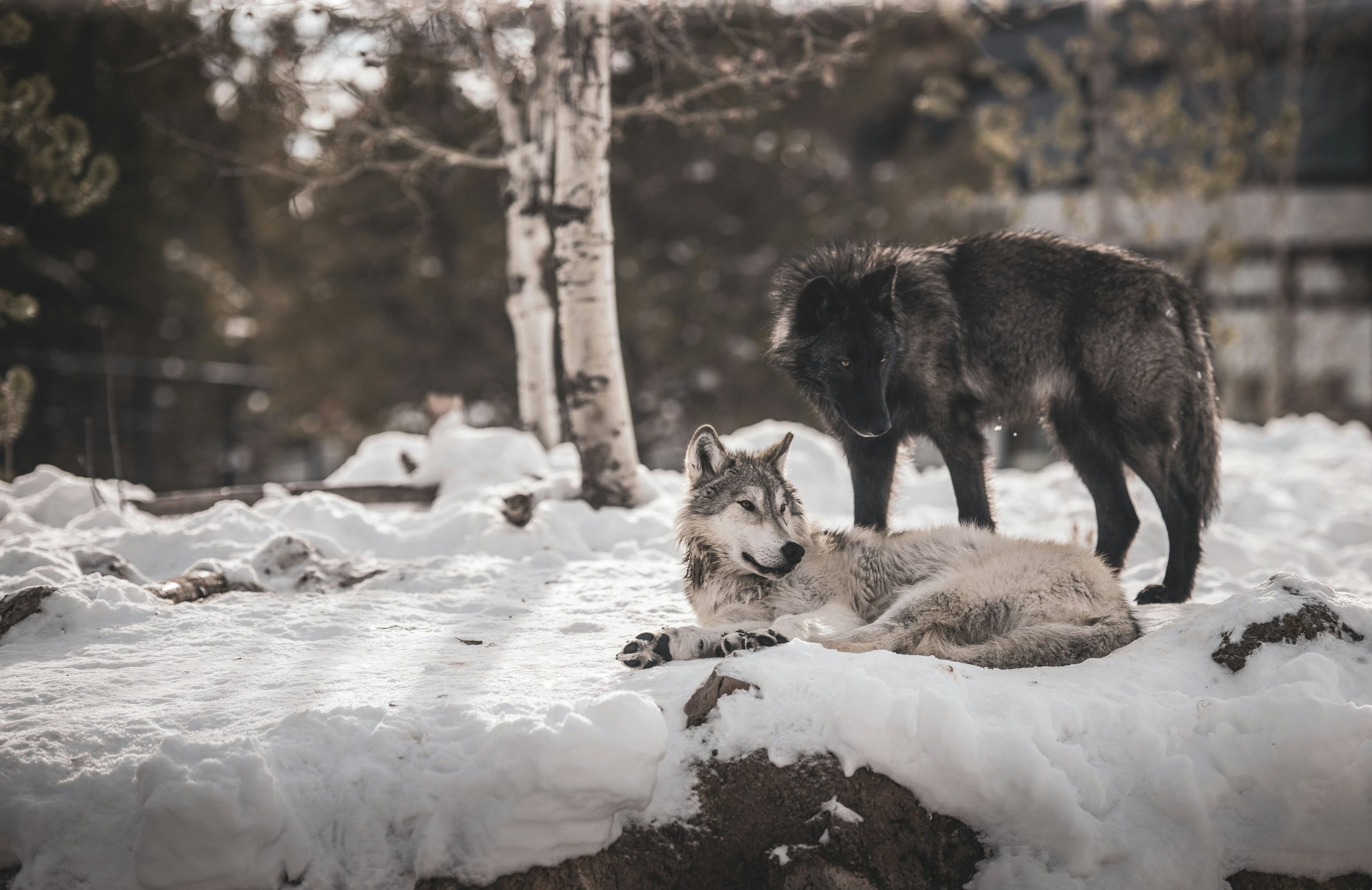
Photo by Luemen Rutkowski on Unsplash
How modern media split wolves into “monster” vs. “spirit animal” — and why both versions make coexistence harder
Wolves are real animals living in real landscapes.
But online, wolves are often turned into something else: a character. Sometimes that character is a nightmare. Sometimes it’s a symbol of purity and freedom. And in both cases, the result is the same—the real wolf disappears.
This is the fourth post in our Wolf Stories series: a cultural series that treats stories seriously without letting them replace science. The goal isn’t to shame anyone for loving wolf art, wolf myths, or wolf movies. It’s to help all of us notice when the story is steering fear (or fantasy) in ways that damage coexistence.
Because coexistence isn’t shaped only by biology. It’s shaped by public perception, and public perception is shaped by what we share.
The big idea
Wolves are real animals. “The Wolf” is a character.
Modern media tends to flatten wolves into two stereotypes:
- The Monster
- The Spirit Animal
Both are compelling. Both are shareable. And both make coexistence harder—because neither teaches people how wolves actually behave in the real world, or what prevention looks like in a working landscape.
Wolf #1: The Monster (fear-content wolf)
This is the wolf of thrillers, horror films, “news-y” viral clips, and captions written to spike adrenaline.
You’ll recognize the pattern:
- dramatic music
- a zoomed-in clip with no context
- language like “stalking,” “hunting,” “waiting,” “lurking,” “pack attack”
- a conclusion drawn from a moment, not a pattern
The monster narrative doesn’t need to be accurate. It needs to be felt.
And once a story is felt, it’s often believed.
Why the monster sells
Fear is an attention engine. Platforms reward content that:
- stops the scroll
- triggers emotion
- prompts arguments
- spreads fast
Wolves are a perfect target for fear-content because many people already carry inherited wolf imagery: a “danger” reflex built by centuries of folklore, moral metaphor, and fairytale shorthand.
When modern media taps that reflex, it doesn’t just entertain. It primes people to support quick, reactive policies—often focused on punishment or removal—rather than long-term prevention.
The hidden damage
The monster story tends to do three things:
- It exaggerates risk to people. Wolves are generally cautious of humans. The overall risk is low. But fear-content can make rare scenarios feel common.
- It erases context. A wolf near a road or a town can mean many things—passing through, displaced movement, scavenging near attractants, habituation from human food, seasonal behavior. A short clip rarely tells you which.
- It trains the public to confuse a moment with a pattern. Coexistence depends on patterns: attractants, predictable opportunity, livestock routines, and prevention. Fear-content depends on moments.
Wolf #2: The Spirit Animal (symbol-only wolf)
This is the wolf of inspirational quotes, hyper-aesthetic edits, and purity narratives:
- “Wolves are misunderstood angels.”
- “They’re just like us.”
- “They only kill the sick.”
- “They never cause real problems.”
This wolf is the opposite of the monster… but it can be just as misleading.
Why the spirit wolf is appealing
Because it feels like restoration.
In a world that’s crowded, loud, and extracted, wolves become a symbol of something clean and ancient. The spirit narrative offers:
- connection
- hope
- meaning
- beauty
And those things matter. Wonder matters. Love for wildness matters.
But when the wolf becomes only a symbol, the real wolf disappears again.
The hidden damage
The spirit narrative can unintentionally harm coexistence because it:
- Dismisses lived experience. People who live near wolves—especially those managing livestock—can feel erased or judged. When legitimate challenges are denied, polarization grows.
- Encourages “symbol politics.” When wolves become identity markers, conversations shift from practical solutions to moral battles. And when everything becomes moral, compromise becomes betrayal.
- Creates impossible expectations. Wolves are predators. Predation is not a character flaw. It’s ecology. If we pretend wolves are harmless saints, real conflict feels like “proof” that wolves are evil—which feeds the monster narrative again.
The result: a public debate that can’t solve real problems
Here’s the trap:
- Monster narrative makes people demand removal.
- Spirit narrative makes people deny conflict.
- Conflict continues because prevention doesn’t get funded or implemented.
- The monster narrative points to conflict as “proof.”
- The cycle repeats.
In the middle, the real wolf—and the real landscape—gets crushed.
Reality check: wolves as animals, not symbols
A wolf is not a moral lesson. It’s a social canid trying to survive.
Wolves:
- live in family groups
- hold territories
- learn patterns fast
- adapt to opportunity
- generally avoid people, especially when not habituated
- can come into conflict with livestock, especially when protection is inconsistent
This is why prevention matters so much. Coexistence isn’t built by how much we love wolves or how much we fear them.
It’s built by reducing opportunity and protecting livelihoods while keeping wildlife wild.
What balanced wolf storytelling looks like
If you’re a content creator, educator, supporter, or simply someone who shares wildlife posts—here’s a standard worth aiming for:
1) Show the landscape, not just the animal
A wolf clip without context is a story factory. Include the setting: season, habitat edge, human structures, attractants, livestock presence, distance.
2) Separate observation from interpretation
Instead of: “The wolf is stalking.”
Try: “A wolf is moving along the tree line. The camera is near a road.”
Interpretation can be useful—but label it.
3) Include coexistence tools as part of the story
If wolves are near farms or communities, mention real prevention tools:
- fencing
- night containment
- guardian animals
- herding routines
- attractant management
- temporary deterrents in hotspots
This is how we shift the public conversation from fear/idealization to practical solutions.
4) Avoid the “either/or” framing
Wolves can be ecologically important and socially complicated.
Both can be true at the same time.
A simple media literacy checklist
Use this the next time you see a viral wolf post:
- What is observable? What do you actually see (distance, direction, behavior)?
- What is being claimed? What story is being told about what you saw?
- What context is missing? Attractants, season, habituation history, local policies, livestock routines?
- What would prevention look like here? If conflict is the concern, what tools reduce opportunity?
If a post can’t answer these questions, it may be more story than reality.
How to talk about wolves better (without killing the magic)
You can keep wonder. You can enjoy myth. You can love wolf art.
Just don’t confuse it with wolf behavior.
Try these phrases:
- “That’s a powerful symbol. What do wolves actually do in ecosystems?”
- “Is this an observation, or an interpretation?”
- “What would prevention look like in a real landscape?”
- “Does this post teach reality—or reinforce fear?”
Educator tip: bring a short wolf story (folklore, fairy tale, viral post) to class. Have students underline facts and circle interpretations. It turns culture into a critical-thinking tool.
One-minute actions
If you want to help coexistence—not just debate it—do one small thing today:
- Before you share wolf content, ask: “Does this teach reality or reinforce fear?”
- When you hear a wolf claim, ask: “What’s the evidence?”
- Support education and prevention, the unglamorous work that actually reduces conflict.
- Model better storytelling: add one sentence of context, one sentence of reality, and one sentence about prevention.
Because wolves don’t need to be monsters.
And they don’t need to be saints.
They need to be understood—as animals in landscapes we share.
Filed under
Stay in the pack