
Wolves, Coyotes, and Dogs
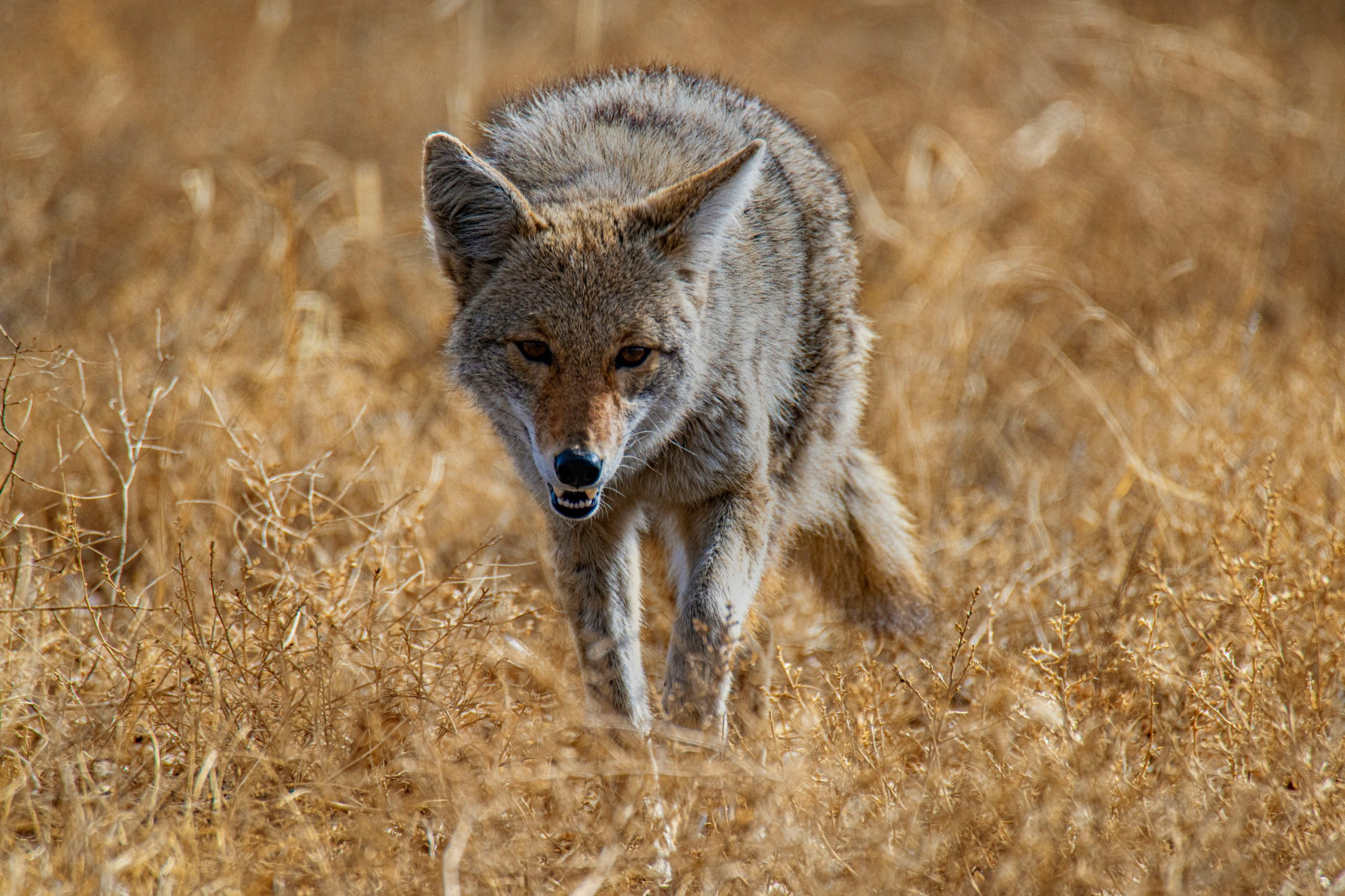
A practical field guide for observers
It’s one of the most common questions in wolf country: “Was that a wolf, a coyote, or someone’s dog?”
The honest answer is that a single clue is rarely enough. But a handful of easy-to-spot features can get you surprisingly far, especially if you look at the whole package: shape, movement, tail, ears, legs, gait, and behavior.
This guide is designed for observers in real conditions: brief sightings, low light, confusing distances, and animals that don’t stand still.
Quick rule before you start
If you’re unsure, don’t guess confidently. Use “canid” and observe safely from a distance. And never approach to confirm.
1) Overall silhouette and proportions
Wolf
- Built like an endurance athlete: long legs, deep chest, large feet
- Body looks solid and broad through the shoulders
- Head appears blockier and heavier than a coyote’s
- Neck often looks thick, especially in winter coat
Coyote
- Built like a lightweight runner: narrow chest, slim legs, delicate build
- Head looks more pointed, muzzle narrower
- Often appears “leggy and light” rather than powerful
Domestic dog (varies a lot)
- Dogs can mimic both shapes, but many have “off” proportions for wild canids
- Common dog tells: very short legs (many breeds), very bulky chest (some breeds), very small feet (some breeds), or exaggerated features (big head, flat face, curly tail)
2) Tail: one of the best quick clues
Wolf tail
- Usually straight and heavy, carried low (often hanging down)
- Looks like a thick “brush”
- Rarely curled over the back
Coyote tail
- Often carried lower too, but looks thinner and more “stringy”
- Frequently has a black tip
- Can look more animated or “twitchy” than a wolf’s
Dog tail
- Huge variety, but watch for:
- curled tail over the back (common dog indicator)
- high flagging tail (held up and waving)
- plumed tail with very long feathering (many dogs)
3) Ears and head shape
Wolf
- Ears are relatively small compared to head
- Often appear rounded at the tips from a distance
- Head looks broad; muzzle not needle-thin
Coyote
- Ears look larger and more prominent relative to head
- Muzzle looks narrow and pointed
Dog
- Floppy ears, very large ears, or unusually shaped ears can be a dog clue
- Many dogs have head shapes that don’t match wild canids (bulldog faces, domed skulls, very short muzzles)
4) Legs, feet, and stance
Wolf
- Long legs and a “big-footed” look
- Stands with a grounded, confident posture
- Often looks larger than people expect once you notice leg length and chest depth
Coyote
- Legs can look long too, but the overall frame is narrower
- Feet look smaller relative to body
- Often appears “fine-boned”
Dog
- Very short legs, very long body, or “tiny feet for size” often suggests dog
- Wide variety makes this a supporting clue, not a standalone answer
5) Movement and gait: the strongest real-world identifier
If you can watch how the animal moves, you get a major advantage.
Wolf gait
- Often a steady ground-eating trot
- Moves efficiently in a straight line with minimal bounce
- Looks like it can travel forever
Coyote gait
- Tends to have a lighter, quicker trot
- More bounce, more frequent directional changes
- Often looks “busy” compared to a wolf’s calm efficiency
Dog gait
- Often inconsistent: stop-start, zig-zag, playful hops
- Frequently looks back, circles, or breaks into sudden sprints
- May show “human-linked” behavior (checking behind, approaching roads or people)
6) Behavior: what it’s doing matters
Wolf
- Often purposeful travel: crossing a valley, following a contour, moving along edges
- Usually avoids people and doesn’t linger near human activity unless habituated or food-conditioned
- May travel alone briefly, but the behavior often looks focused
Coyote
- More likely to be seen near human edges, fields, suburbs
- Often hunting small prey, mousing, pausing, listening, pouncing
- More tolerant of people in many regions
Dog
- Often shows signs of “pet logic”: wandering near homes/trails, approaching people, responding to voices, playing, or following a scent without a clear travel line
7) Color: the least reliable clue
Wolves are not always gray. Coyotes are not always “tan.” Dogs can be anything.
Use color only as a secondary clue.
8) A simple observer checklist
When you see a canid, ask:
- Tail: low and straight (wolf/coyote) or curled/high flagging (often dog)?
- Ears: small vs head (wolf) or big and prominent (coyote)?
- Build: broad chest and big feet (wolf) or narrow and light (coyote)?
- Gait: steady straight-line trot (wolf) or bouncy/erratic (dog/coyote)?
- Behavior: purposeful travel (wolf) or mousing/pausing/pouncing (coyote) or pet-like checking/approaching (dog)?
If you get 3–4 wolf-aligned answers, you may have seen a wolf. If you get mixed signals, stick with “canid.”
9) Safety and ethics reminder
- Keep distance. Don’t follow for photos.
- Keep dogs controlled in wolf country.
- Never feed wildlife or leave food waste accessible.
- If you suspect habituated or food-conditioned behavior, report to local authorities/park staff.
The Big Idea
Wolves, coyotes, and dogs can look similar at a glance, but they move through the world differently. The best identifiers are not color or “how scary it looked,” but proportions, tail carriage, ear-to-head ratio, and especially gait.
Stay in the pack